
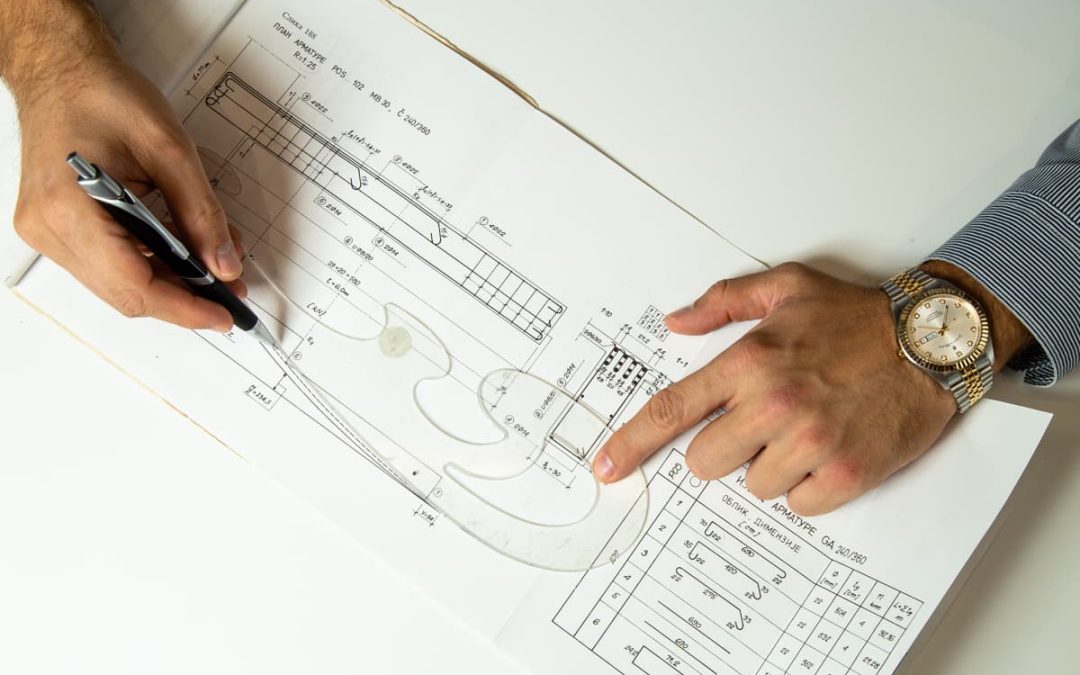
Structural engineers today are working under unprecedented conditions shaped by the combined effects of economic volatility, material supply disruptions, and rapid market fluctuations. Over the last five years, beginning with the onset of COVID-19, the profession has experienced a new level of pressure to adapt and optimize designs for high-rise buildings and major engineering structures — all while ensuring safety, code compliance, and cost-efficiency.
The pandemic disrupted global supply chains, leading to sharp increases in the cost of steel reinforcement, cement, formwork materials, and construction logistics. When these costs rose — in some cases doubling between 2020 and 2022 — structural engineers were forced to rethink traditional approaches to design. They began leaning more heavily on value engineering, early supplier collaboration, and structural system optimization to reduce material consumption without compromising safety.
At the same time, geopolitical events — such as the war in Ukraine, trade restrictions, and regional labor shortages — added new layers of uncertainty. These external factors have led to delays in material deliveries, increased insurance and shipping costs, and fluctuating exchange rates, all of which affect the price and availability of core structural components like reinforcement mesh, steel profiles, and high-strength concrete admixtures.
Structural engineers have responded by adopting more flexible design methodologies, such as performance-based seismic design, high-efficiency static systems (e.g., core-and-outrigger systems in towers), and the use of higher-strength concrete classes and ductile steel grades to reduce overall material volume. They’ve also embraced digital tools like finite element modeling (FEM), parametric design, and BIM-integrated structural analysis to fine-tune performance and reduce waste.
In summary, over the past five years, the role of structural engineers has expanded beyond calculation and modeling — it now includes strategic planning, risk management, supply chain awareness, and cost forecasting. The most successful engineers are those who can navigate this complex landscape by integrating technical precision with a deep understanding of market forces and material dynamics.
Reinforcement (steel bars or meshes) is a critical structural component of reinforced concrete – a system that combines high compressive strength of concrete with the high tensile strength of steel. This combination allows for the construction of highly durable, strong, and cost-effective structures such as bridges, skyscrapers, tunnels, and dams.
Without reinforcement, concrete would fail under even modest tensile stresses.
________________________________________
🕰️ When Was Reinforced Concrete First Used?
The first documented use of reinforced concrete dates back to 1849, when Joseph Monier, a French gardener, began reinforcing concrete flower pots with steel mesh to improve their strength.
In 1867, he patented his technique under the name ferro-cement, which became the foundation of modern reinforced concrete.
________________________________________
👨🔬 Who Invented Reinforced Concrete?
🎓 Joseph Monier (France)
Originally a gardener, later an inventor and engineer.
Patented reinforced concrete in 1867.
His patent was later adopted and improved for large-scale industrial use.
________________________________________
🏗️ Pioneers in the Development of Reinforced Concrete:
1. Joseph Monier (France) – Inventor, 1867
2. François Hennebique (France) – Developed the first monolithic reinforced concrete frame systems
3. Robert Maillart (Switzerland) – Bridge design innovator using reinforced concrete
4. Eugène Freyssinet (France) – Inventor of prestressed concrete
5. Gustave Magnel (Belgium) – Early adopter and promoter of prestressed systems in the 20th century
________________________________________
🌍 How Reinforced Concrete Changed the Global Economy
Reinforced concrete has:
Enabled the construction of skyscrapers, transforming urban architecture
Reduced construction costs, thanks to concrete’s affordability and steel’s efficiency
Shortened construction timelines, due to fast casting and assembly
Accelerated industrialization and infrastructure growth, especially post–WWI and WWII
Improved safety through better fire, earthquake, and weather resistance
________________________________________
🔝 5 Key Examples Where Reinforced Concrete Revolutionized the World
________________________________________
1. 🏙️ Skyscrapers – Chicago and New York
In the late 19th and early 20th centuries, reinforced concrete allowed for high-rise construction with thin slabs and wide spans.
Impact: Revolution in urban living, business, and city design.
________________________________________
2. 🌉 Bridge Design (Garabit Viaduct Influence)
Although the Garabit Viaduct (1885) was steel, later bridges by Robert Maillart used reinforced concrete with open arch forms.
Impact: Long-span bridges became cheaper and more visually striking.
________________________________________
3. 🏭 Industrial Halls and Factories – Germany (1920s–1950s)
Reinforced concrete was widely used in rebuilding and expanding industrial infrastructure.
Impact: Lower costs, faster rebuilding after WWII, rapid industrialization.
________________________________________
4. 🚇 Subway Systems and Underground Structures
Reinforced concrete enabled safe tunneling in dense cities.
Examples: London Underground, Moscow Metro, Paris Métro
Impact: Efficient public transit and smarter urban logistics.
________________________________________
5. 🏢 Mass Housing – Soviet Union (1950s–1980s)
“Panelka” (prefabricated housing panels) allowed for rapid construction of residential buildings.
Impact: Tens of millions housed quickly and cheaply through large-scale, reinforced concrete structures.
________________________________________
📌 Conclusion:
Reinforced concrete is one of the greatest technological breakthroughs in the history of construction. Its development:
Transformed how we build,
Enabled vertical and horizontal urban expansion,
Became the foundation of modern infrastructure.
Today, over 90% of global structures contain some form of reinforced concrete.